1. The Quiet Change Within Every Battery
The globe is silently undergoing a transformation that many people never ever discover. Whenever an electrical car increases calmly onto a freeway, each time a smartphone holds its cost through a full day of use, each time a grid-scale battery bank stores solar power for the evening, a single product is operating at the heart of the operation. That product is lithium carbonate. This white, odor-free, free-flowing powder looks average, yet it lugs within its crystal framework the capacity to power the twenty-first century. Lithium carbonate is the fundamental lithium salt where the cathodes of nearly all lithium-ion batteries are made. Without it, the electric lorry transformation would delay. Without it, renewable energy storage would certainly remain a desire. Without it, the mobile electronics that define modern life would discontinue to function. This is the story of exactly how battery-grade lithium carbonate came to be one of the most important material you have never become aware of, and the story of the brand that has devoted itself to producing this product at the highest possible criterion of pureness and performance.
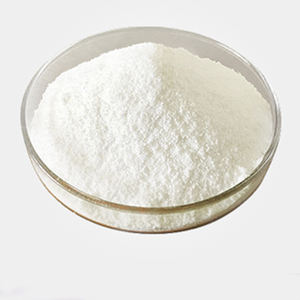
(Lithium Carbonate Powder)
2. The Birth of a Battery Revolution
The background of lithium carbonate is inseparable from the history of the lithium-ion battery. In the 1970s, scientists began experimenting with lithium as a battery product, acknowledging its phenomenal electrochemical possibility. But very early lithium batteries were unstable and hazardous, vulnerable to catching fire or blowing up. The development came in 1980, when John B. Goodenough found that lithium cobalt oxide could work as a cathode product that was both steady and high-performing. This discovery laid the foundation for the initial industrial lithium-ion battery, presented by Sony in 1991. Yet Goodenough’s exploration was just the start. Scientist rapidly realized that various cathode chemistries called for various lithium resources. Lithium cobalt oxide, lithium manganese oxide, lithium iron phosphate, and the nickel-cobalt-manganese ternary products all trace their beginnings back to the exact same forerunner: lithium carbonate. As battery technology evolved, so did the needs on lithium carbonate. Early batteries can function with industrial-grade material. But as power densities boosted and security demands tightened up, the industry required something much more refined. Battery-grade lithium carbonate, with its strict purity requirements and ultra-low pollutant degrees, became the new standard. The change from industrial-grade to battery-grade lithium carbonate marked a transforming point in the history of power storage. It was no longer sufficient for lithium carbonate to be merely pure. It needed to be pure at the parts-per-million level, with magnetic pollutants gauged partly per billion. This is the requirement that specifies our product today.
3. From Salt Lakes and Minerals to Battery-Grade Excellence
The trip of lithium carbonate from raw material to battery-grade powder is among the most demanding purification processes in commercial chemistry. Lithium is extracted from 2 primary sources: brine down payments in salt lakes and hard-rock minerals such as spodumene. Both resources generate lithium in forms that should be thoroughly refined before they can become battery-grade lithium carbonate. The manufacturing of battery-grade lithium carbonate typically includes several phases of purification. Precipitation, recrystallization, carbonation, and drying are all used to accomplish the called for purity degrees. Pollutants such as sodium, potassium, calcium, iron, copper, and lead has to be decreased to parts-per-million or even parts-per-billion degrees. Magnetic foreign bits, mostly iron, nickel, and zinc steels or their oxides, are taken into consideration the primary killer in the battery sector. Our item keeps magnetic substance degrees at just thirty-one components per billion, much listed below market standards. This is not an accident. It is the result of a manufacturing procedure that we have actually improved over years of research and development. Our exact formation control procedure types thick primary particles and second agglomerates with a securely regulated bit size circulation. The mean particle dimension, or D50, is regulated at 6.0 micrometers, making certain fast and uniform diffusion in non-aqueous natural solvents. This is essential for accomplishing ultra-thin, crack-free coatings on current collection agencies throughout electrode manufacture. The low hygroscopicity of our item, with dampness content listed below 0.12 percent, prevents gelation of PVDF binders during battery manufacturing and prevents undesirable side responses during high-temperature calcination. Every step of our manufacturing procedure is created with one goal in mind: to deliver lithium carbonate that battery suppliers can rely on, batch after set.
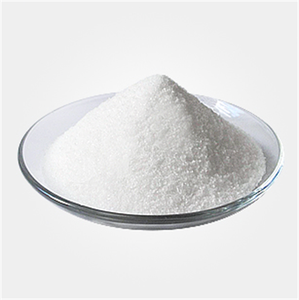
(Lithium Carbonate Powder)
4. The Chemistry That Makes the Difference
At the heart of battery-grade lithium carbonate is a straightforward chemical fact: purity matters. The primary web content of our lithium carbonate is 99.68 percent, going beyond the nationwide battery-grade standard. This level of purity is not arbitrary. It directly establishes the electrochemical activity and architectural stability of the last cathode material. In the crystal lattice of layered oxides such as high-nickel NCM or olivine structures such as LFP, lithium ions should inhabit very bought placements. Any type of contamination or openings interrupts this order, lowering first-cycle Coulombic performance and relatively easy to fix certain capability. The result is a battery that provides less power, degrades much faster, and falls short earlier. The significance of ultra-low magnetic substances can not be overstated. Magnetic bits can pierce the separator, leading to thermal runaway. A lot more critically, they can cause lithium dendrite formation on the anode surface area. Dendrites are tiny lithium steel structures that grow during billing and can at some point link the void in between electrodes, causing a short circuit. By keeping magnetic substance degrees at thirty-one parts per billion, we considerably enhance cycle life and rise success rates in security tests such as nail penetration and crush examinations. The bit dimension circulation of our item is similarly essential. With D10 at 2 micrometers and D50 at 6 micrometers, the powder ensures quick diffusion in NMP solvent, forming a secure solid-liquid suspension slurry with reduced sedimentation. This allows battery manufacturers to generate ultra-thin electrodes with constant finishing high quality. Worldwide of battery manufacturing, consistency is everything. A solitary set of lithium carbonate with inconsistent particle dimension or elevated pollutants can spoil an entire manufacturing run. Our commitment to quality assurance makes sure that every delivery meets the very same demanding specifications.
5. From Our Laboratory to the Globe
Our journey with lithium carbonate began with a recognition that the battery sector was being held back by inconsistent material high quality. Some distributors provided lithium carbonate that satisfied requirements on paper but failed in technique. Others could not keep regular pureness from batch to batch. Battery manufacturers were required to spend many hours qualifying brand-new providers, testing every shipment, and declining material that did not fulfill their criteria. We saw a chance to do much better. We invested in cutting edge manufacturing facilities efficient in producing battery-grade lithium carbonate with consistent pureness, bit dimension, and contamination degrees. We created logical techniques to identify every set of lithium carbonate we create. We applied extensive quality control systems that evaluate for primary material, magnetic materials, bit dimension circulation, dampness material, and a full collection of trace impurities. And we built a technological assistance group that aids our customers integrate our lithium carbonate right into their cathode manufacturing processes. Our lithium carbonate is used in the production of lithium iron phosphate cathodes for electric automobiles and power storage systems. It is utilized in the production of nickel-cobalt-manganese cathodes for high-energy-density batteries. It is utilized in the production of lithium cobalt oxide cathodes for portable electronic devices. Every application demands something different from lithium carbonate, and we work with our customers to guarantee that our product fulfills their particular needs. We do not supply a solitary lithium carbonate and case it solves every problem. We provide a product that has actually been engineered to the greatest feasible criteria of purity and performance, and we supply the technical proficiency to aid our clients be successful. This customer-centric method has actually gained us the trust of battery makers worldwide. From Asia to Europe to North America, business count on our lithium carbonate to deliver regular performance in their batteries.
(Lithium Carbonate Powder)
6. The Worldwide Rise in Lithium Carbonate Need
The demand for lithium carbonate is growing at an unmatched price. In 2025, international need for lithium carbonate reached around 1.45 to 1.55 million loads. By 2026, the market is anticipated to expand by 30 percent, with some forecasts suggesting also greater development prices if demand acceleration proceeds. The lithium carbonate market size is forecasted to boost from 1.15 million LCE loads in 2025 to 1.41 million LCE loads in 2026, and get to 3.93 million LCE tons by 2031. The market for micronized battery-grade lithium carbonate alone is projected to grow from 5.67 billion bucks in 2025 to 14.23 billion bucks by 2032, displaying a substance yearly development rate of 12.8 percent. This explosive growth is driven by 3 key elements. First, the global transition to electric vehicles is accelerating. Every electric automobile has 10s of kgs of lithium carbonate in its battery pack. Second, the buildout of grid-scale energy storage space systems is producing massive brand-new need for lithium-ion batteries. Third, the expansion of portable electronic devices continues to drive stable need for lithium carbonate. The lithium carbonate market is not without its challenges. Rates have actually experienced significant volatility, rising to over 22 dollars per kg in early 2026 before regulating. Supply chain restraints and geopolitical factors have actually presented unpredictability. Yet the long-lasting trajectory is clear. The globe is electrifying, and lithium carbonate goes to the facility of that change. Our setting in this growing market is improved a foundation of high quality, dependability, and technological proficiency. As demand continues to rise, we are increasing our production ability to satisfy the requirements of our clients.
7. The Science That Drives United States Forward
The scientific research of lithium carbonate is regularly advancing. Scientists around the globe remain to find brand-new applications and brand-new methods to improve the efficiency of this remarkable product. Advancements in cathode chemistry are driving need for lithium carbonate with even higher pureness and more exact particle dimension circulations. The advancement of next-generation battery modern technologies, such as solid-state batteries and lithium-sulfur batteries, will produce brand-new needs for lithium carbonate and its derivatives. At our business, we invest greatly in research and development to remain at the leading edge of lithium carbonate scientific research. Our R&D group functions carefully with academic companions to check out brand-new purification techniques, new condensation methods, and new applications for lithium carbonate. We have actually created production processes that accomplish magnetic substance levels of simply thirty-one components per billion. We have actually achieved key content of 99.68 percent. We have actually optimized bit dimension circulation to guarantee fast dispersion and regular layer top quality. But we are not resting on these accomplishments. We are constantly functioning to boost our item and develop new qualities of lithium carbonate for emerging applications. We are exploring methods to lower the ecological impact of our production procedures. We are creating recycling innovations that can recuperate lithium carbonate from invested batteries. This dedication to scientific research is not practically staying competitive. It is about advancing the area and creating value for our customers. We believe that the most effective way to offer our clients is to recognize lithium carbonate far better than anyone else, which indicates continual investment in study, evaluation, and innovation. The lithium carbonate of tomorrow will certainly be various from the lithium carbonate of today. It will certainly be purer, more consistent, and more lasting. It will certainly enable batteries with higher energy density, longer cycle life, and far better safety and security. And we will exist, blazing a trail.
(Lithium Carbonate Powder)
8. What Our team believe
Lithium carbonate is more than a chemical substance. It is the foundation of the electric future. The electrical vehicles that lower our reliance on nonrenewable fuel sources depend upon lithium carbonate. The energy storage space systems that enable renewable energy to power our grids depend upon lithium carbonate. The portable electronic devices that link us to the globe rely on lithium carbonate. These are not tiny things. They are the columns of a sustainable future, and they depend on the high quality and uniformity of battery-grade lithium carbonate. At our business, our company believe that generating the best lithium carbonate is not just an organization opportunity. It is a duty. Our company believe that battery manufacturers are worthy of products they can trust, set after batch. Our team believe that the shift to electrical transportation and renewable energy depends on a trustworthy supply of high-purity lithium carbonate. We believe that advancement in lithium carbonate production and application will certainly drive development in energy storage space, ecological sustainability, and international prosperity. And our company believe that our function is to provide the best lithium carbonate and the inmost technical expertise to aid our customers be successful. These ideas assist every little thing we do, from our research and development to our customer assistance to our dedication to sustainability. We are not just a provider of lithium carbonate. We are a companion in constructing the electrical future.
9. The Words of Our Owner
Roger Luo, President of our firm, assesses the trip that created this business. I founded this firm since I saw that battery-grade lithium carbonate can power a cleaner, much more sustainable world. We have proven that, and we are simply beginning.
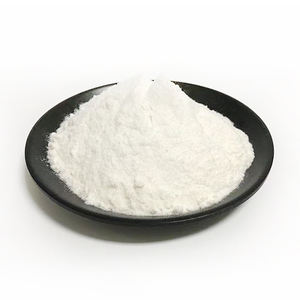
(Lithium Carbonate Powder)
10. Distributor
RBOSCHCO is a trusted global chemical material supplier & manufacturer with over 12 years experience in providing super high-quality chemicals and Nanomaterials. The company export to many countries, such as USA, Canada, Europe, UAE, South Africa, Tanzania, Kenya, Egypt, Nigeria, Cameroon, Uganda, Turkey, Mexico, Azerbaijan, Belgium, Cyprus, Czech Republic, Brazil, Chile, Argentina, Dubai, Japan, Korea, Vietnam, Thailand, Malaysia, Indonesia, Australia,Germany, France, Italy, Portugal etc. As a leading nanotechnology development manufacturer, RBOSCHCO dominates the market. Our professional work team provides perfect solutions to help improve the efficiency of various industries, create value, and easily cope with various challenges. If you are looking for lithium carbonate for, please feel free to contact us and send an inquiry.
Tags: Lithium Carbonate,carbonate of lithium,Li₂CO₃
All articles and pictures are from the Internet. If there are any copyright issues, please contact us in time to delete.
Inquiry us